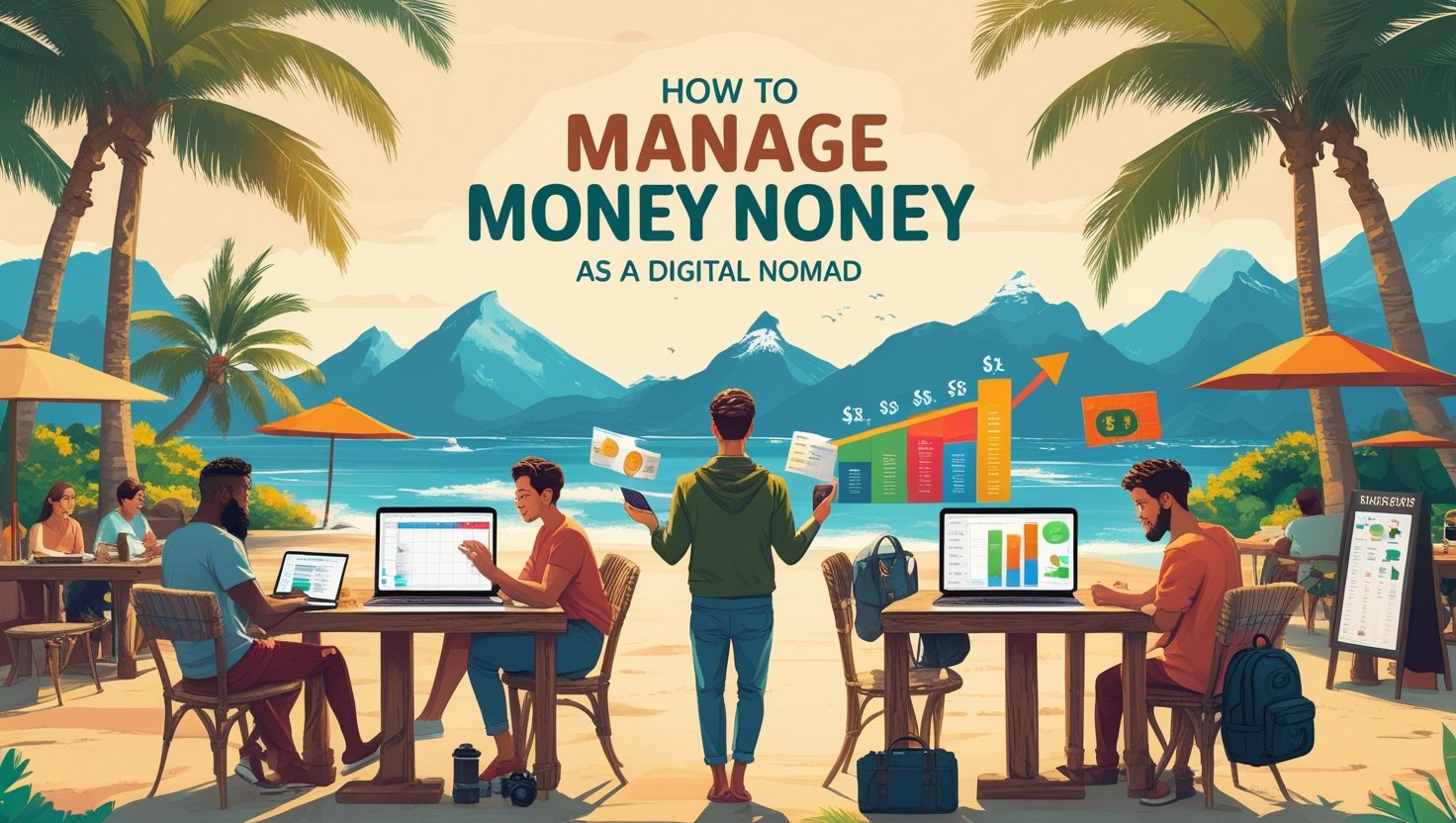
The lifestyle of a digital nomad is a way of life where a person does not work by staying at one place but works online from different cities or countries of the world, and also travels. The first and the biggest difference in this lifestyle is that you do not have fixed monthly expenses, but your expenses keep changing according to where you go. You have to estimate everything from rent to internet bills and transport costs separately. And income is also often irregular because the work is project-based or comes through freelance clients. That is why a digital nomad needs to work on their own. In matters of money, you have to be very disciplined and flexible. You need to understand that the lifestyle and its financial impact in every place are different.
For example, living in Southeast Asia is not expensive, but in Europe or America, daily expenses become high. In such a situation, you have to learn to adjust your income for every month and keep your spending habits under control. In this lifestyle, you do not have the support of a stable salary. Therefore, it is very important to have an emergency fund and savings. Along with this, you have to learn to use digital tools and apps that help you track expenses and understand your money. This lifestyle gives freedom and flexibility. Along with this, self-discipline and smart financial planning are also required.
Creating a Location-Based Budget Strategy:
When you are a digital nomad, your monthly budget is prepared according to a new city or country, so it becomes very important for you to create a location-based budgeting strategy. The cost of living is different in every place, and if you do not plan, your budget can go out of control. First of all, you should research the average rent of the place you are going to, the cost of food, transport, and internet. For this, online platforms like Numbeo or Expatistan are quite helpful. You have to decide this based on your monthly income.
How much time would be feasible to spend in a particular country or city?
This budget should include both fixed and variable expenses. Fixed expenses include accommodation, insurance, and subscriptions, while variable expenses include items such as travel, shopping, or entertainment. Another important thing is the difference in currency exchange rates. In some countries, the dollar is strong and in some it is weak.
In such a situation, you should also take care of currency conversion and transaction fees. While making a budgeting strategy, you should also keep an eye on your income sources. If you are remote working, then how much money would you get from which client, and
On which day would you get it?
All this should also be planned through location-based budgeting. You know that in every city, what is the limit of your spending, and
Where do you have the opportunity to save?
This will help you manage your money more effectively and not get into financial stress while travelling.
Income Streams and Freelance Finance Management:
In the digital nomad lifestyle, the source of income is not fixed like in a traditional job. Often, people do freelance work or develop multiple income streams like remote jobs, passive income, or online businesses. In this lifestyle, the first step is to create reliable income sources that can give you consistent cash flow. In freelancing, it takes time to get clients, and sometimes the work is more, and sometimes less. Therefore, it is very important to develop a strong client base and build long-term work relationships with them. Apart from this, you have to keep track of your income. Sending the invoice for every project on time and receiving payments is also a separate responsibility.
Often, clients make late payments. For this, you must set the contracts and payment terms beforehand You need a system in which you can calculate your monthly earnings and understand how much money is coming from which stream and in which stream there is a shortage For this, apps like QuickBooks Wave or Notion are helpful Tax calculation is also important Many nomads earn in multiple countries, so they have to understand international tax laws and file them according to the rules of their country Freelance finance does not only mean earning money but also understanding, tracking and saving it When you understand your income, you will earn money It becomes easy to use it better and you can enjoy both travel and work in a stress-free way.
Smart Banking and Currency Management While Traveling:
As a digital nomad, banking and currency management are a very important part of your everyday life. When you travel to different countries, you must know how to keep your money safe and easily accessible. First of all, you should use digital banks or fintech apps that are made for international usage, such as Wise, Revolut, N26, or Payoneer. These platforms offer multi-currency wallets in which you can manage different currencies and withdraw money from any ATM. Keeping transaction and withdrawal fees low is a key point of this lifestyle. Apart from this, you also need to know currency conversion rates.
You should also be aware that when the value of the dollar, euro, or pound changes, it has a direct impact on your expenses. Some apps offer real-time currency tracking and low-fee conversion. You should also check with your traditional bank whether it allows foreign usage and at what rate you can transfer or withdraw money.
You should avoid banks that charge high fees on international transactions. It is also important to keep your cards secure online as you are working on new networks and devices all the time. If you manage your banking with smart tools, you not only get security but also financial control. It stays, and you don’t face any difficulty while travelling.
Saving, Investing, and Emergency Planning on the Road:
Becoming a digital nomad does not mean that you give up on your saving or investing plans. Rather, this lifestyle demands more financial discipline. When you are constantly traveling, having an emergency fund is a top priority because your flight can get canceled at any time, a medical emergency can occur, or a project can be stopped.
The emergency fund acts as a buffer for every unexpected expense. Apart from this, while creating a savings strategy, you should evaluate your monthly expenses and keep some part of them aside every month, it should be 10%. Or 20% regular savings keeps you mentally relaxed. Investing is also possible for digital nomads, but it depends on which country you are in and what the financial policies are there for you.
You can invest in mutual funds, stocks or crypto, but no step should be taken without research and risk analysis Diversification, i.e. investing money in different places is very important so that if there is a loss in one place, it is covered from the other place Apps like Binance, EToro or Robinhood help you track investments You also have to see what kind of taxes will be applicable There should be a balance between saving and investing and the emergency plan should always be updated These three things keep you financially stable no matter where you are in the world.
Conclusion:
The digital nomad lifestyle is full of freedom and adventure, but if money is not managed properly, this freedom can quickly turn into stress. That is why having financial control is a core element of this lifestyle. If you plan a budget everywhere, manage your income wisely, and use smart banking tools, you can enjoy both travel and work. Also, if you maintain a balance between saving and investing and are prepared for any emergency, your future is secure.
You don’t need to be perfect all the time, but with consistent planning and awareness, you can be very You can escape difficult situations By becoming a digital nomad, you get to see new colors of life But with every new journey, new expenses, new taxes and new systems have to be dealt with If you regularly check your financial health, update your strategy and take financial advice when needed, then you can live a long-term sustainable and fulfilling nomadic life Remember that financial freedom is not just about earning money but about understanding them and putting them in the right place When you learn this, the digital nomad lifestyle becomes not just a dream but an successful reality.
FAQs:
- Why is money management important for digital nomads?
Money management is crucial for digital nomads because their income is often irregular, and their living expenses vary depending on the country or city they’re in. Without proper planning, they can quickly face financial stress. Discipline, budgeting, and flexibility help ensure they can sustain their lifestyle and continue traveling without financial disruption. - How can a digital nomad create a location-based budgeting strategy?
A location-based budgeting strategy involves researching the cost of living in each destination before arrival, including rent, food, transport, and internet. Digital nomads should factor in currency exchange rates, fixed vs. variable expenses, and income timing. This kind of planning helps avoid overspending and ensures financial stability in different countries. - What are the best ways to manage freelance income and multiple income streams?
Freelancers and digital nomads should build reliable income sources and maintain long-term client relationships. Managing invoices, tracking payments, and using financial tools like QuickBooks or Wave can help. Understanding international tax laws and planning for delayed payments are also important for stable financial management. - What are some smart banking and currency tips for digital nomads?
Digital nomads should use international-friendly banks or apps like Wise, Revolut, or Payoneer that offer multi-currency wallets and low transaction fees. Tracking real-time exchange rates and securing online transactions are vital. Avoiding high-fee banks and keeping backup cards secure ensures smooth financial access across countries. - How can digital nomads save, invest, and plan for emergencies?
Digital nomads should prioritize building an emergency fund covering 3–6 months of expenses. Saving consistently (10–20% of income) and diversifying investments across platforms like stocks, mutual funds, or crypto—with proper research—can build long-term stability. Understanding local tax rules and updating the emergency plan regularly is key for financial security on the road.