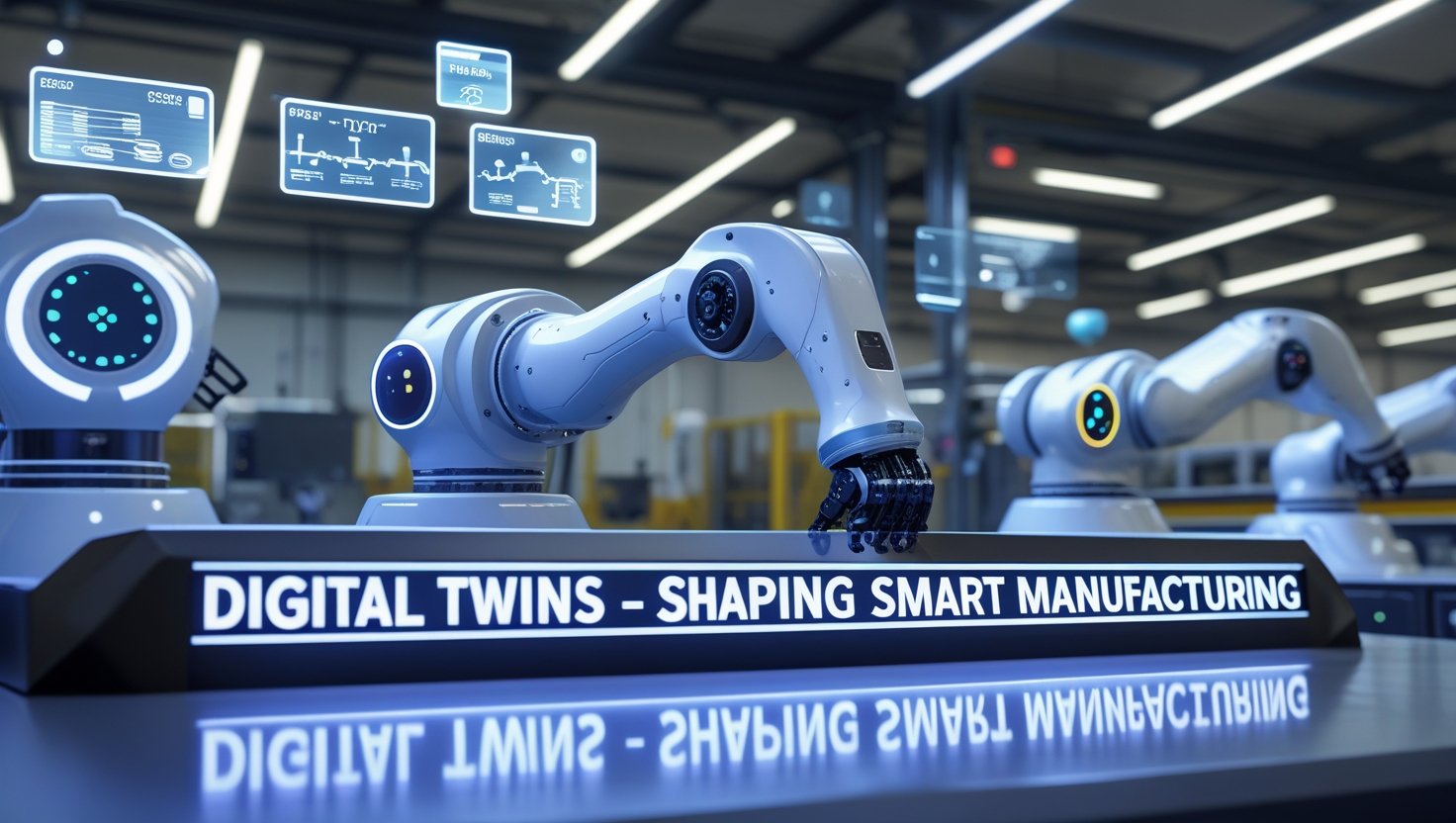
Imagine a mirror that not only reflects your image but also displays your current status, potential improvements, and future possibilities. In an age where the physical and digital worlds converge, Digital Twins are emerging as the ultimate game-changer in Smart Manufacturing. This technology creates virtual replicas of machines, systems, or entire factories, bringing unseen insights and precision to production processes. As industries race to optimize operations and innovate rapidly, digital twins are proving to be the keystone for efficiency, reliability, and breakthrough progress.
Virtual Mirror: The Essence of Digital Twins:
At its core, a Digital Twin is a dynamic, evolving digital representation of a physical asset or process. Unlike static computer models, these twins are continuously updated with real-time data, thanks to sensors and IoT devices embedded within manufacturing equipment. This constant flow of information allows engineers and decision-makers to monitor and simulate real-world conditions without physically altering the asset.
What sets digital twins apart is their capacity to analyze performance, predict maintenance needs, and even test “what if” scenarios. Imagine virtually tweaking a production line to see how it would handle increased demand before making any costly changes. This proactive approach to problem-solving and innovation makes digital twins an indispensable tool in the modern manufacturing landscape, where every second of downtime and every inefficiency can add up to significant losses.
By acting as a precise virtual mirror, Digital Twins enable a granular inspection of individual machine components and the overall production process, driving improvements in quality and throughput while reducing waste and unexpected downtime.
Crafting Intelligent Ecosystems:
The evolution from traditional manufacturing to Smart Manufacturing is not just about automation, it’s about creating a deeply interconnected ecosystem where every element communicates and collaborates seamlessly. Digital Twins play a pivotal role in this transformation by serving as the backbone of intelligent systems that are capable of real-time decision-making.
In today’s digital factories, sensors integrated into machinery collect a wealth of data, ranging from temperature fluctuations and energy consumption to vibration analysis. This data feeds into the digital twin, allowing for continuous monitoring and predictive analytics. The result? Manufacturers can identify potential issues before they escalate into costly breakdowns or production halts.
Beyond reactive maintenance, these virtual models unlock opportunities for optimization that were previously out of reach. They facilitate targeted adjustments to production schedules, resource allocation, and even the design of new processes. The move toward Smart Manufacturing is fueled by the ability to see and understand the entirety of a production process, creating an environment where every decision is informed by accurate, real-time data.
Moreover, this intelligent ecosystem fosters greater collaboration across departments. Engineers, maintenance personnel, and production managers can all work from the same digital blueprint, ensuring that improvements are both holistic and synchronized with the overall strategic goals of the organization.
Seamless Symbiosis:
One of the most transformative aspects of Digital Twins is the seamless integration of the tangible world with a dynamic digital counterpart. This merging—what one might call a symbiosis—enables manufacturers to tackle challenges in real time with a level of insight that was previously unimaginable.
The integration begins with sophisticated sensor networks attached to physical assets. These sensors capture every minute detail of operational performance, environmental conditions, and even wear and tear. The data is then transmitted to a centralized platform where the digital twin is continuously updated. This real-time feedback loop means that the virtual model is not just an approximation, but a living, breathing representation of the factory floor.
For manufacturers, this provides the dual advantage of immediate visibility into operational performance and the ability to experiment without risk. Want to test the impact of a new production protocol? Simulate the change on the digital twin first. Need to ascertain the influence of unexpected environmental changes? The digital model will reflect the real-world consequences almost instantaneously.
Such an approach not only increases efficiency but also significantly reduces downtime. By anticipating issues before they occur, manufacturers can implement preventative measures, ultimately saving time, resources, and money. In the competitive landscape of modern industry, the seamless symbiosis between physical assets and their digital replicas is rapidly becoming the secret weapon for sustainable operational excellence.
Innovative Layers:
In a world driven by data, Digital Twins Technology adds layers of innovation that extend well beyond simple monitoring. This technology provides a multi-dimensional view of production processes, empowering businesses to innovate at every step of the manufacturing cycle.
One of the most compelling applications is in predictive maintenance. By continuously analyzing data, digital twins can forecast when a machine is likely to fail, allowing maintenance teams to intervene well before a breakdown occurs. This preemptive approach not only avoids costly repairs but also minimizes disruptions in production schedules. Manufacturers can shift from a reactive mode—fixing issues as they arise—to a proactive strategy that anticipates and prevents problems.
Furthermore, digital twins are instrumental in process optimization. They allow businesses to simulate different scenarios, such as changes to production parameters or shifts in raw material quality, and immediately see the impact on output. Decision-makers can test various configurations in the digital realm, leverage the insights gained, and then implement the most effective solutions on the factory floor. This iterative process of virtual experimentation and real-world application is pivotal in driving continuous improvement.
Digital Twins Technology also plays a crucial role in product development. By creating digital prototypes, companies can explore design changes, perform stress tests, and even simulate user interactions—all without the expense and time associated with building physical models. This speeds up the development cycle and leads to more innovative, customer-centric products.
Additionally, the technology enhances collaboration by providing a single source of truth for all stakeholders. Whether it’s engineers refining a production line or managers evaluating performance metrics, the digital twin ensures everyone is aligned, informed, and capable of making data-driven decisions.
Future Horizons:
The future of Smart Manufacturing holds vast promise, and at its heart lie Digital Twins as catalysts for transformation. As industries continue to adopt advanced technologies, the role of digital twins is poised to expand, unlocking new dimensions in productivity and innovation.
In the coming years, we can expect digital twin platforms to become even more refined, leveraging advancements in artificial intelligence and machine learning. These enhancements will enable more sophisticated simulations, deeper predictive analytics, and even greater automation within factories. Imagine a scenario where entire supply chains are governed by interlinked digital replicas, ensuring that every element, from raw materials to the final product, is optimized for peak performance.
Moreover, the integration of augmented reality (AR) and virtual reality (VR) into digital twin interfaces is set to revolutionize how operators and engineers interact with data. Visualizing a production process in VR can transform training programs, maintenance procedures, and design assessments, making complex systems more intuitive and manageable.
As Smart Factories evolve, sustainability will become an equally important focus. Digital twins offer the ability to precisely measure resource consumption and emissions, providing a clear pathway to greener operations. By optimizing energy usage, reducing waste, and extending asset lifecycles, manufacturers can not only boost efficiency but also contribute to a more sustainable future.
The economic benefits are manifold. From reducing operational costs and preventing downtime to accelerating innovation cycles, digital twins pave the way for significant competitive advantages. Industries that embrace this technology today are likely to be the leaders of tomorrow, setting the standards for excellence and efficiency in manufacturing.
Navigating Roadblocks:
While the promise of Digital Twins is immense, integrating this technology into manufacturing systems is not without its challenges. Understanding and addressing these roadblocks is key to a successful transition and long-term benefit.
One of the primary challenges is the complexity of data integration. Manufacturing environments generate vast amounts of data from different sources, including legacy systems, modern sensors, and disparate software platforms. Harmonizing this data into a single, coherent digital twin requires robust data management strategies and sometimes significant infrastructure investments.
Cybersecurity is another major concern. As digital twins rely on real-time data transfer and cloud-based platforms, they become attractive targets for cyberattacks. Manufacturers must therefore implement rigorous security protocols, advanced encryption, and continuous monitoring to safeguard sensitive operational data. Balancing accessibility with security is a delicate act that demands constant vigilance.
Cost considerations also play a crucial role. Setting up a digital twin environment involves not just the initial investment in sensors, connectivity, and software development, but also ongoing maintenance and upgrades. Smaller manufacturers, in particular, may find these costs challenging. However, as the technology matures and becomes more widespread, economies of scale and rapid innovation in this space are expected to bring down costs significantly.
Finally, there’s the human element—ensuring that staff are adequately trained to work with new digital systems. Successful implementation of digital twins depends on a cultural shift within the organization, where data-driven decision-making becomes the norm and cross-functional collaboration is encouraged.
Despite these challenges, the benefits of digital twin integration far outweigh the hurdles. By adopting a phased approach, investing in robust cybersecurity measures, and fostering a culture of continuous learning, manufacturers can successfully navigate these roadblocks and build a resilient, future-proof operation.
Conclusion:
Digital Twins are reshaping Smart Manufacturing by bridging the gap between the physical and digital worlds. With real-time data, predictive analytics, and a capacity for continuous improvement, they empower manufacturers to optimize operations, innovate product development, and stay ahead in an increasingly competitive landscape. As industries adopt these transformative technologies, the future of manufacturing becomes not just smarter, but remarkably efficient and sustainable.
FAQs:
What is a Digital Twin? A digital twin is a living, virtual model of a physical asset or process that continuously updates with real-time data, enabling simulation and predictive analysis.
How do Digital Twins benefit Smart Manufacturing? They enhance efficiency by predicting maintenance needs, optimizing processes, and enabling risk-free testing of production changes in a virtual environment.
Are Digital Twins used in other industries? Yes, beyond manufacturing, digital twins are applied in sectors like healthcare, smart cities, automotive, and energy for monitoring and performance optimization.
What data sources power Digital Twins? They aggregate data from sensors, IoT devices, legacy systems, and real-time input from production environments to create accurate digital replicas.
How do Digital Twins enable proactive maintenance? By analyzing real-time data and predicting potential failures, digital twins allow for timely maintenance before issues cause downtime or damage.
What is the future of Digital Twins in manufacturing? The future points toward more integrated, AI-enhanced digital twin systems that drive real-time decision-making, increased sustainability, and enhanced product innovation.